

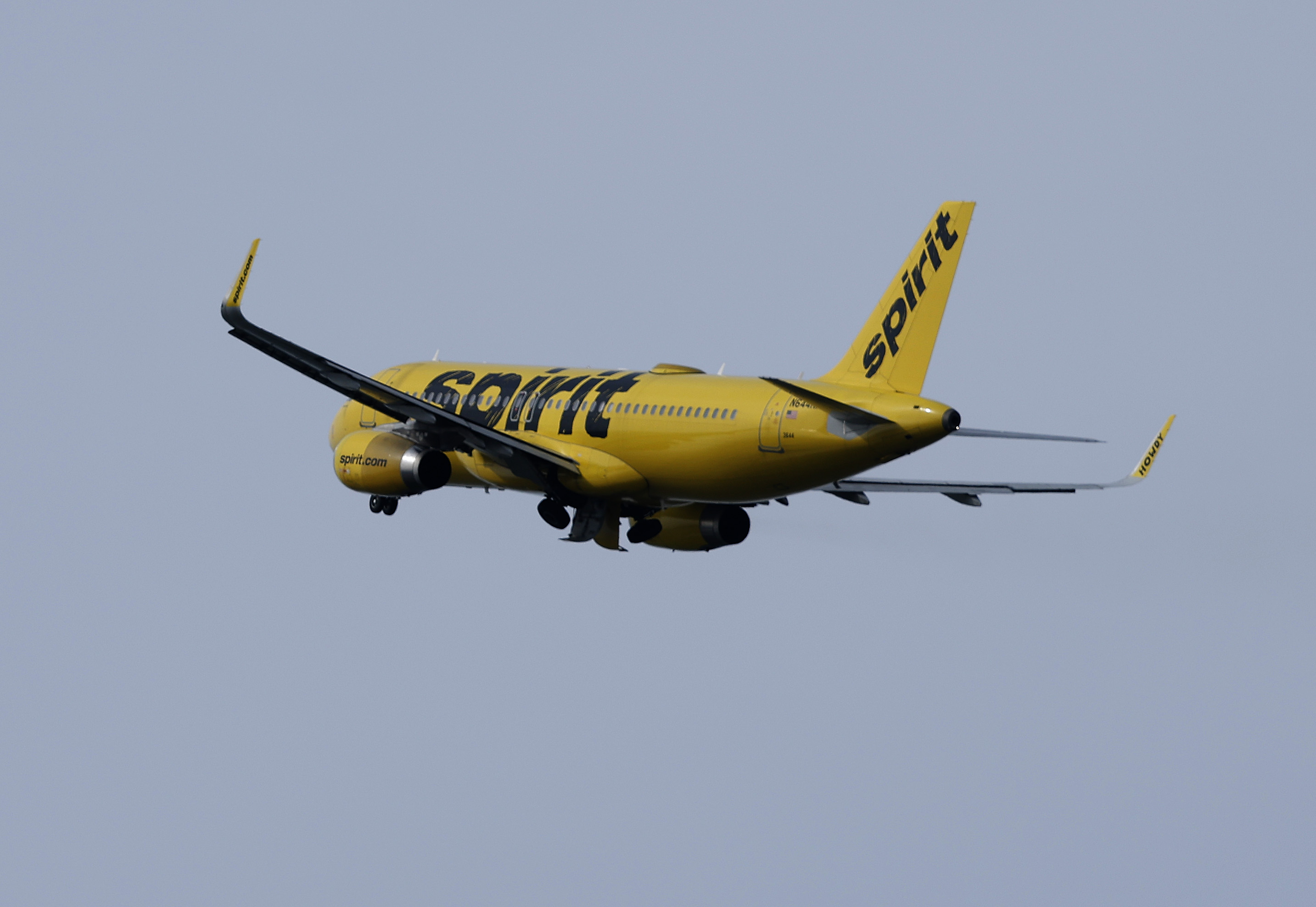
Spirit Airlines has officially gone out of business after 34 years in an abrupt airline collapse that stranded travelers and shocked many, but why did it happen?
The ultralow cost airline that once operated hundreds of daily flights on its bright yellow planes and employed about 17,000 people said over the weekend it had “started an orderly wind-down of our operations, effective immediately.”
The airline said on its website that all flights were canceled and customer service is no longer available. The final Spirit flight landed at Dallas Fort Worth International Airport from Detroit Metropolitan Airport.
Here’s what to know about what happened:
Why did Spirit Airlines shut down?
Although Spirit had gone bankrupt twice before, the company said high oil prices, which have been rising because of the war with Iran, made it impossible to stay aloft.
“We are proud of the impact of our ultra-low-cost model on the industry over the last 34 years and had hoped to serve our guests for many years to come,” Spirit’s announcement said.
In court papers filed Monday, the airline said it was forced to ground its fleet because “recent geopolitical events resulted in a massive and sustained increase in fuel prices.” The court papers did not specify which geopolitical events they were referring to, but the announcement comes as jet fuel prices have soared following the start of the war in Iran, NBC News reported.
“The Debtors and their advisors searched for increased capital and any sources of savings or liquidity, leaving no option unexplored,” the airline stated in records.
“It became clear on Thursday that sufficient incremental liquidity would not be found, and that there were no longer any viable paths to a restructuring or continued operations.”
The Trump administration had considered a government bailout for the cash-strapped business to keep it from going under, but a deal was not reached. Of the potential bailout, Duffy said Saturday “we often times don’t have half a billion dollars laying around.”
President Donald Trump had floated the idea of a bailout last week after the airline found itself in bankruptcy proceedings for the second time in less than two years with jet fuel prices soaring because of the Iran war.
The White House had blamed President Joe Biden’s administration for Spirit’s tenuous financial situation. Biden, a Democrat, opposed a proposed merger between Spirit and JetBlue in 2023. On Saturday, Trump administration officials took to social media to amplify voices of conservative critics who faulted Biden for Spirit’s demise.
On Saturday, Duffy blamed Biden as well as his predecessor Pete Buttigieg.
“Many at the time said that this was a disaster. This merger should have been allowed,” he said.
Tad DeHaven, a policy analyst at the Cato Institute, a libertarian think tank, said the Trump administration also bears responsibility, arguing that the airline’s current crisis reflects a chain reaction of policy missteps rather than a single decision. He pointed specifically to Trump’s decision to strike Iran as “bad foreign policy,” saying the conflict drove up jet fuel prices and Spirit’s operating costs.
“They were already in trouble,” DeHaven said, describing the situation as “a compounding effect in terms of policy.”
The timing
In the court papers, Spirit said it asked the Federal Aviation Administration “to issue a ground stop for Spirit flights to ensure no accidental dispatches” overnight Saturday.
The airlines’ debtors decided “the safest time to make this announcement was when no planes were in the air and all crew who were away from their bases had sufficient time to check into hotel accommodations,” the papers state.
“These actions were taken to prioritize the safety of passengers and crew,” they wrote.
What can travelers do?
U.S. Transportation Secretary Sean Duffy said Saturday that Spirit had a reserve fund set up for customers who bought directly from the airline to get refunds. People who bought from third-party vendors like travel agents would have to seek refunds from them.
Duffy said United, Delta, JetBlue and Southwest were offering $200 one-way flights for people who had Spirit confirmation numbers and proof of purchase for a limited time. Other airlines would also help Spirit employees who might be stranded, as well as offering them a preferential application process as they look for work.
The company advised customers that they could expect refunds but there would be no help in booking travel on other airlines.
What to know about Spirit Airlines
Spirit proudly disrupted the penny-pinching portion of the airlines industry with its no-frills, low-cost flights and provocative ads like its “Check Out the Oil on Our Beaches” campaign after the Deepwater Horizon disaster in 2010, referencing suntan oil, but alluding to the crude spilled on the Gulf Coast.
However, Spirit has struggled financially since the COVID-19 pandemic, weighed down by rising operating costs and growing debt. By the time it filed for Chapter 11 protection in November 2024, Spirit had lost more than $2.5 billion since the start of 2020.
The budget carrier sought bankruptcy protection again in August 2025, when it reported having $8.1 billion in debts and $8.6 billion in assets, according to court filings.
The carrier flew about 1.7 million domestic passengers in February, roughly half a million fewer than during the same month a year earlier, according to aviation analytics firm Cirium. Spirit also has sharply reduced its capacity, with about half as many seats available this month than in May 2024.

