

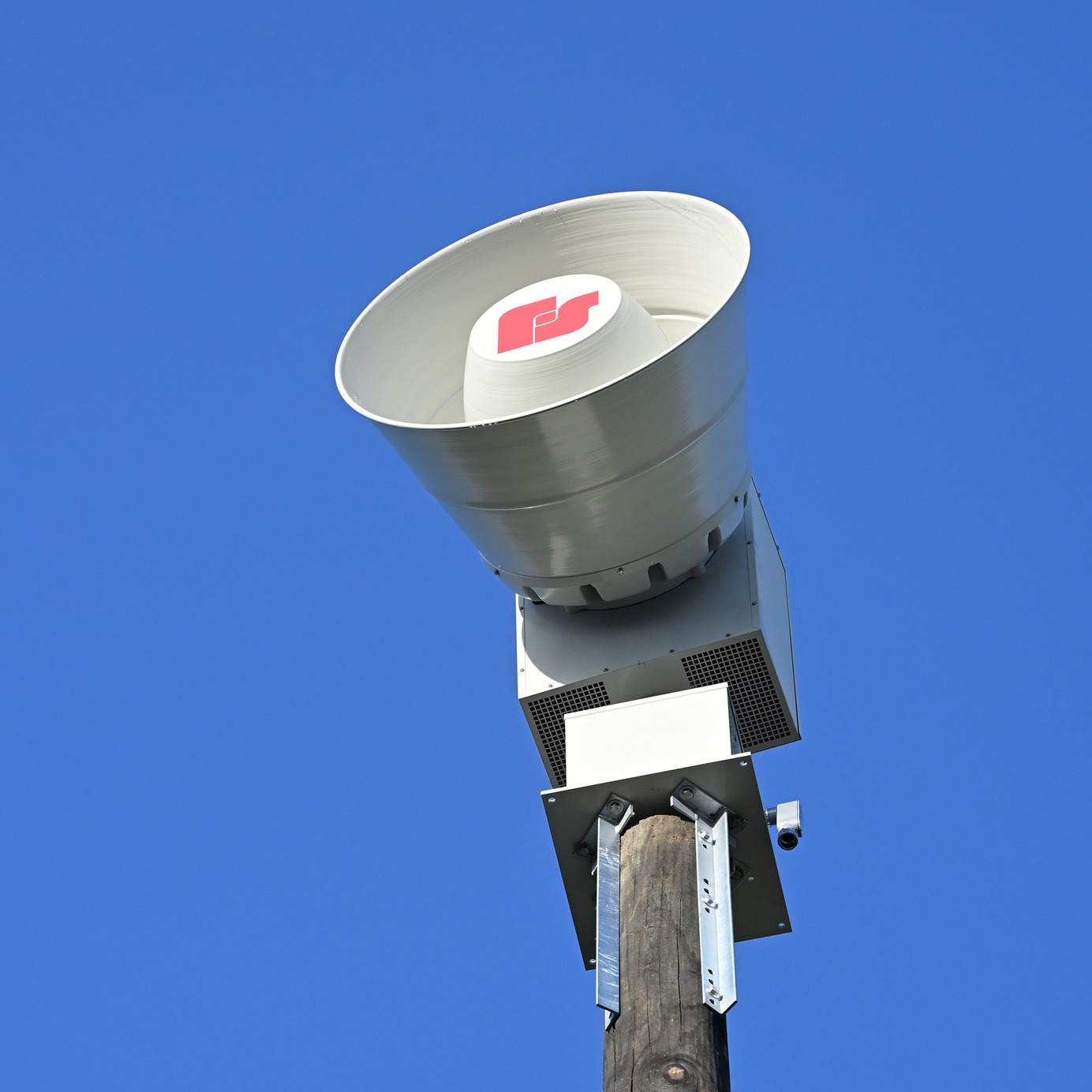
Tornado sirens sounded multiple times Tuesday night as severe storms swept the Elgin area, but with no tornado warnings in place, many residents were left questioning once again.
At 9:15 p.m., Elgin police reported “the Elgin sirens activated for a considerable thunderstorm warning with 75 MPH winds and/or 1.75” (golf ball size) hail.”
Several minutes later, the department said it was “aware of the multiple siren activations,” reiterating “this was due to ongoing alerts from the National Weather Service regarding 1.75” hail and/or 75 MPH winds.”
According to the NBC 5 Storm Team, while tornado sirens are sounded when there is a warning issued, either because a tornado is on the ground or because rotation has been detected within a thunderstorm, some municipalities will sound sirens when there is a threat of a tornado as well.
The city of Elgin noted in a recent social media post that its sirens are activated “whenever the US National Weather Service Chicago Illinois (NWS) issues a severe weather warning, such as for tornadoes, winds over 70 mph, or other extreme conditions.”
“These sirens are designed to alert people who are outdoors to seek shelter. They are not intended to notify people who are already indoors,” the city wrote.
Several of the NWS alerts Tuesday, including one for McHenry, Lake, Kane and DeKalb counties, were tagged as “tornado possible” storms, meaning that while there wasn’t strong enough rotation to issue a warning, there was a possibility that the storms could spin up a tornado quickly.
“The NWS issued a severe thunderstorm warning at 9:16 p.m. for northern DeKalb and Kane counties with the tornado possible tag, which means a tornado wasn’t an imminent threat for a tornado, but it’s possible,” Storm Team 5 meteorologist Kevin Jeanes said.
In a recent interview, Chris Kennedy, the Elgin division chief of the Emergency Management Agency, spoke about the reasoning behind sounding the alarms without an active tornado warning.
According to Kennedy, in 2024, the city replaced its previous siren system with a federal system known as an “outdoor severe weather warning system.”
“The term tornado sirens is kind of an antiquated misnomer,” he said. “Our system is set up for all severe weather. So whether it’s high winds, severe thunderstorm warnings, tornadoes, we are trying to alert people to all hazards.”
Kennedy highlighted that the system is a “severe weather warning system” and “not just tornadoes.”
He stressed that severe weather can move rapidly.
“It can look nice where you’re at and if we can give you 30-40 minutes of warning and that storm is still 30-40 miles away, that storm is going to be on you really quick,” he said.
Jeanes added that “damaging winds over 70 mph sometimes cause more damage than an EF-0 tornado.”
So why might the sirens sound multiple times?
On Tuesday, sirens sounded at least three times and in the storms earlier this month they sounded four times.
According to Kennedy, the sirens are triggered when the National Weather Service changes its warnings.
“When they changed the warning and reissued it, it reactivated the sirens,” he said.
The city added that “if a warning is extended or reissued, the sirens will sound again.”
Kennedy noted the department may still adjust the sirens based on feedback — and there has been plenty with the latest waves of severe weather.
Resident responses have been mixed on social media following the recent storms.
“It is confusing to know what is a severe thunderstorm warning & what is a tornado warning? How do we know? Do I start counting the minutes when it goes off ?” one user wrote on the Elgin Police Department Facebook page.
“All of these false alerts/sirens are frustrating. Blare the sirens when there’s a tornado. If you keep running them when it’s not a tornado, people aren’t going to believe it where there’s an actual tornado. It’s like the boy who cried wolf,” another commented.
“Those that were raised in the area and were trained to run to the basement because it meant a tornado was imminent. So now I’m waking up 4 kids and a dog and taking them to the basement when the sirens go off because that is what it meant for decades,” another stated. “They rewrote the rules, are ignoring common sense, and made no announcements about the change.”
But many also praised the advanced notice.
“The sirens are to warn of tornado type weather.. If you wait to see a tornado it’s too late for warnings,” one user stated.
“Better safe than sorry,” another wrote.
Elgin Police Chief Ana Lalley said the decision can be polarizing.
“You don’t want to catch people off guard. So on one hand, if you don’t tell people soon enough and say ‘This is coming,’ they’re going to say, ‘Why didn’t you tell us? Like we didn’t have time to prepare. We would have left our house if you would have given us five minutes,'” she said. “And on the other hand, people are going to say, ‘Well, it’s sunny. Why are you guys doing this?’ It’s like, ‘Well, it’s sunny where you’re at, but if it potentially could move, no one controls the weather … and it goes quick. So, you know, the city and being proactive and saying, ‘Look, you know, we rather us be safe, right? It’s like an insurance policy. We rather you be safe and we will take the the questions and we will take some of the, you know, the chatter and some of the things. We will take that every single time so that the community is safe.”
Still, Elgin Fire Chief and Emergency Management Director Robb Cagann told NBC Chicago the city is looking into the possibility of having sounds that would differentiate between storm warnings and tornado warnings.

