

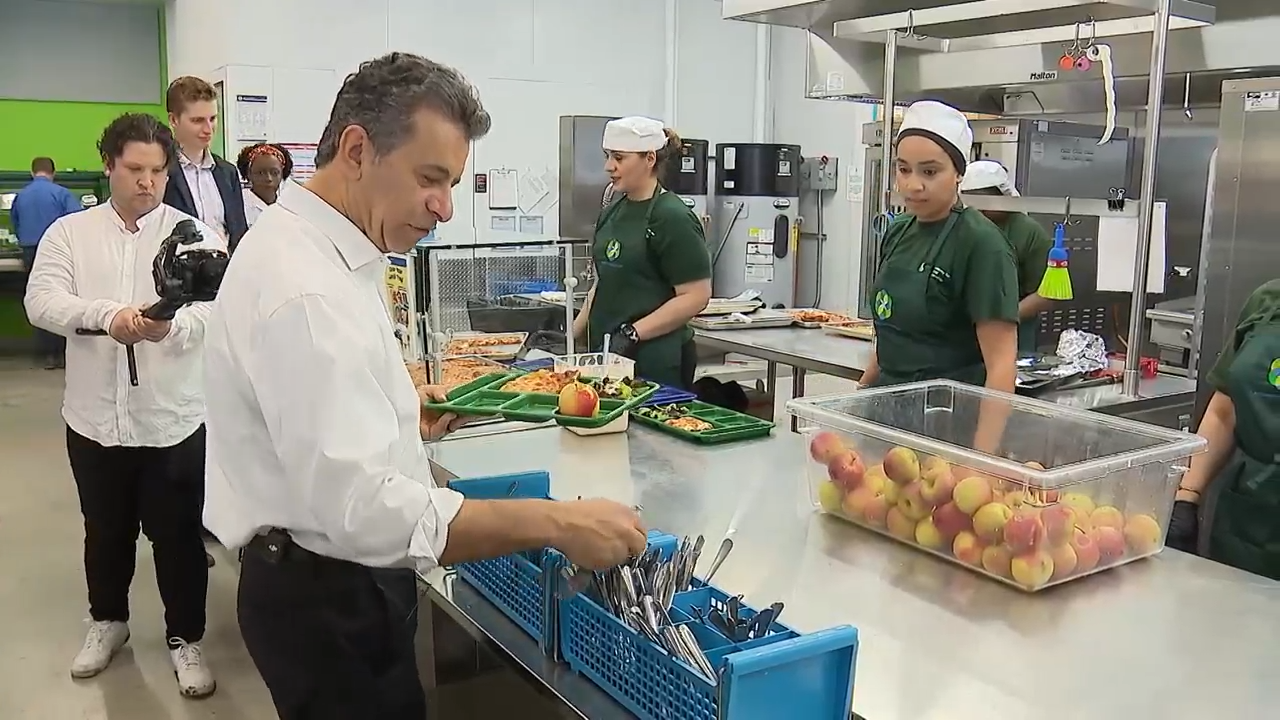
A charter school on Chicago’s South Side is one of a dozen participating in a nationwide, federal pilot aimed at giving children healthier lunches.
The FDA program provided funding to select schools in the 2025-26 school year to purchase whole foods, upgrade kitchen equipment, and hire staff to eliminate heavy metals and chemicals from school lunches.
On Wednesday, FDA Commissioner Dr. Marty Makary visited the Academy of Global Citizenship (AGC) in Garfield Ridge to sample the results.
“This study was basically a simple question at a scientific level, is it possible to switch to healthier foods in a cost neutral way, if we provide coaching, education and some funds for capital costs?” said Makary. “The preliminary result from this school is showing yes, it is possible.”
“They were able to reduce the amount of pesticides in school lunch by 50-80% and reduce heavy metals by 80-90%,” said Dr. Makary.
With its funding, AGC hired a part-time baker to prepare breads and pastries from scratch.
“Processed foods are costly anyway. Being able to transition to making dough from scratch, for instance, is less expensive per unit than buying sheets of pizza dough,” said Stacey Whitney, the culinary director at AGC. “By cross-training our staff, so everyone knows how to do that has made it a more efficient process for us, which also reduces the cost because we’re not spending an unreasonable amount of time doing it.”
Many of the ingredients are grown on a farm on school property or sourced locally.
“So we know exactly what’s in the ingredients. We know the people who are producing it,” said Whitney.
There’s no refined sugar in the kitchen, instead they use honey or maple syrup.
“That’s something that any school can do and we want to encourage that,” said Whitney.
“At this school they’ve demonstrated they can use healthier sweeteners, complex carbohydrates from things like honey rather than the added sugar,” added Makary.
According to the CDC, kids under 18 consume more than 60% of their daily calories from ultra processed foods, and one-in-five are obese.
The full results from the FDA study will be published this summer.
The agency is hoping to learn from them how they can scale programs like this to have a broader impact at schools across the country.
“We have to take a step back and ask why are so many young people overweight, obese and suffering from diabetes? We have to talk about the sourcing of food,” said Makary.
“These are lessons that can be learned more broadly in the community we’re creating. We’re hoping other schools take away some of the very simple takeaways of what you can do in the kitchen to serve healthier food.”

