

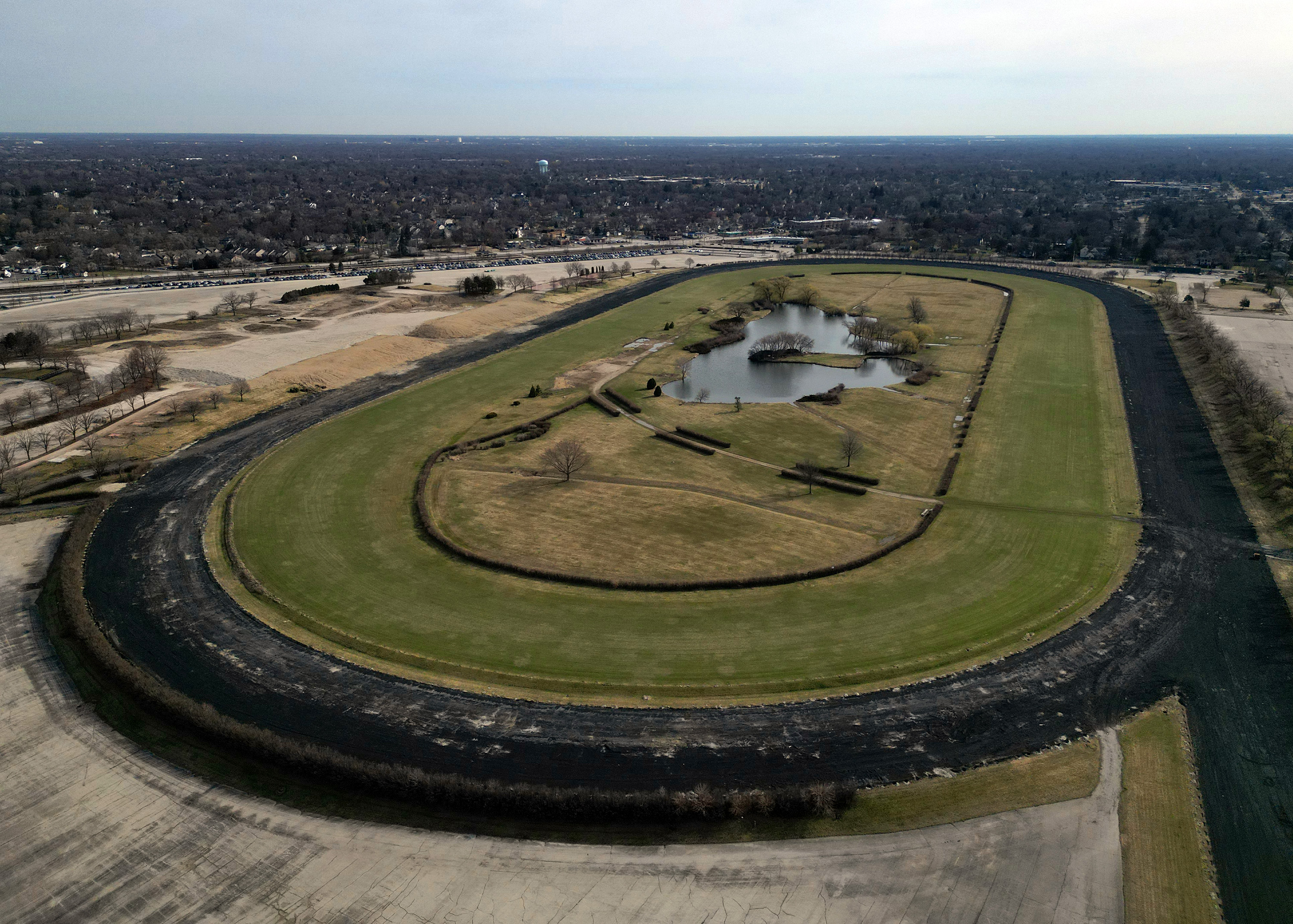
Lawmakers in Springfield are working down to the wire on a variety of subjects, but the Chicago Bears’ stadium project is near the top of the list.
With Indiana also offering up a proposal to try to lure the Bears across the state line, Illinois officials have been negotiating for months on a deal that would lock in property taxes for the team at a site in suburban Arlington Heights, but they’ve run into myriad obstacles during that process.
Indiana’s Senate approved a bill to lure the Chicago Bears to the state, and Mary Ann Ahern has the latest details.
Now, after all the drama, the war of words in the press, and all of the discussions, a deadline is now looming that prove to be the critical moment in the entire process of trying to keep the team within the state of Illinois.
That deadline will arrive at 11:59 p.m. on Sunday night, the Constitutionally mandated end of the spring legislative session in the state of Illinois.
While lawmakers have been known to blow past that deadline, famously doing so during the 1988 negotiations that ultimately led to funds being allocated for the construction of a new stadium for the Chicago White Sox, it still represents a critical juncture in the talks to convince the Bears to stay.
Until that point, only a simple majority of lawmakers are required to approve a piece of legislation to send to the desk of Gov. JB Pritzker. If no agreement on a Bears stadium deal is reached, then a special session of the legislature could be called, but it would also raise the hurdle to clear to lock in the agreement.
That’s because after the spring session the threshold for bill passage rises from a simple majority to a three-fifths majority under the Illinois Constitution. That would require 71 votes for a bill to pass in the House and 36 in the Senate.
While those may not sound like insurmountable odds, the tense negotiations over the Bears bill show just how tenuous the entire situation is. House Speaker Chris Welch has said he won’t call a bill for a vote in the chamber unless it has 60 Democrats supporting it, but there’s been plenty of opposition to the bill within members of the Democratic caucus in Springfield, jamming up the works in both chambers.
If you thought Bears games were unpredictable last season, turns out that’s nothing compared to the team’s search for a new stadium. Mary Ann Ahern reports on the latest in the team’s stadium saga.
Any bill that passes the Senate at this point would undoubtedly have to go back to the House for a vote on the amendments, and the legislation would face an uncertain future there.
The bill in question is known as a PILOT (payment in lieu of taxes) bill, designed to allow the Bears to negotiate a locked-in property tax rate with Cook County and Arlington Heights officials at the stadium site.
The Bears have said that such an agreement is an absolute must if they are going to construct a stadium at the site, but many lawmakers on both sides of the political aisle have raised significant concerns. Chicago lawmakers have questioned whether the Bears should be incentivized to leave Chicago, which they’ve called home since the early 1920s.
Those lawmakers have questions over what would happen to Soldier Field, with the Chicago Park District estimating that a renovation project costing more than $600 million would be required to turn the stadium into a music-specific venue on the lakefront to make up for lost revenue with the team leaving the city.
Mayor Brandon Johnson is not backing down on his push for a domed Bears’ stadium on the Chicago lakefront. While at the same time — the Chicago Park District is preparing for the likelihood the team leaves the city.
Other lawmakers have expressed concerns that locking in property tax rates could put the onus on other property owners within Cook County to pick up the slack in terms of school funding, and Cook County Treasurer Maria Pappas’ office is among those expressing that concern, saying the Bears could save up to $1.5 billion in taxes over the 40-year life of the agreement.
In addition to the PILOT bill, the Bears are also seeking legislation that would free up infrastructure funding to rebuild roads and transit corridors around the Arlington Heights site, with some estimates pegging the amount of money the team is seeking at around $850 million. Some suburban mayors have criticized the Bears for not fulfilling an obligation to publish the results of a traffic study on impacts of a stadium on surrounding areas, and that’s been another hiccup in talks over the project.
Finally, there’s the amount of money still owed on bonds that were issued by the state to help finance the renovation of Soldier Field in the early 2000s. Some estimates peg the amount of money still owed at northward of $350 million, with Pritzker and other lawmakers indicating they would expect that matter to be addressed before new funding is allocated for the team.
In addition, the Bears would owe up to $90 million if they break their lease at Soldier Field before 2033.
All of those negotiations come as Indiana has a deal on the table offering the Bears up to $1 billion in incentives to relocate to a site in Hammond.
The Indiana House is expected to advance a measure aimed at a Chicago Bears stadium project, and we’re learning more about the tax increases that would accompany it, as Mary Ann Ahern reports.
The money would come from a variety of funding sources. That would include doubling Lake County’s hotel tax from 5% to 10%. A 1% food and beverage surcharge would be assessed in both Lake and Porter counties. A 12% tax on all tickets purchased to events at the venue would also be assessed. Finally, there would be a special taxing district in Hammond to capture sales and use taxes around the stadium.
Tollway funds would be used to help fund infrastructure improvements around the stadium site.
The Bears have repeatedly said they want to have a final stadium decision made by late spring or early summer, and the clock is now really ticking on lawmakers who only have a few days left to decide whether or not to pass the key piece of legislation that would encourage the team to stay within the state of Illinois.

