

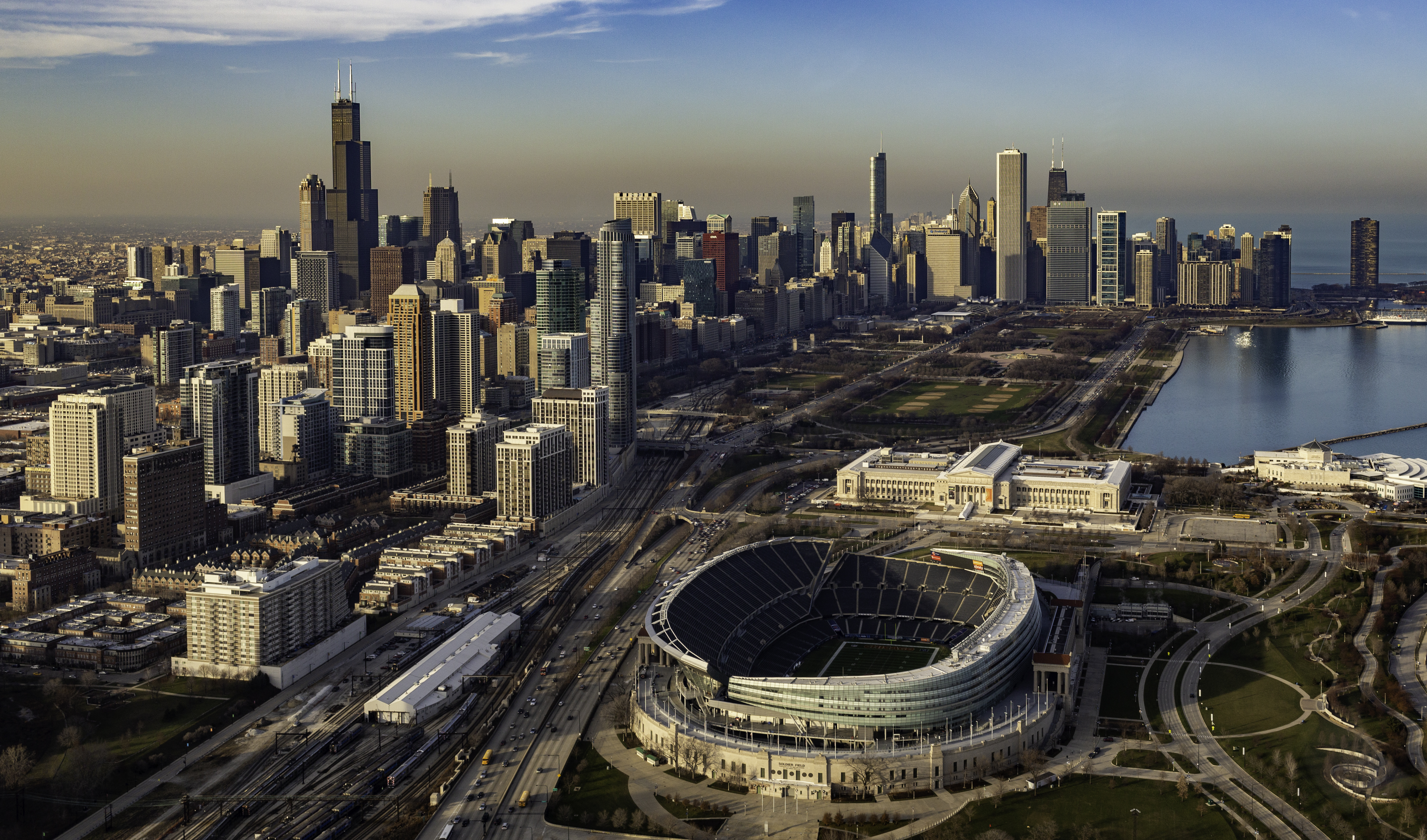
The Chicago Bears didn’t get the answer they were hoping for in Springfield over the weekend as the Illinois legislature failed to pass a bill aiming to keep the team in the state. So what’s next for the team and the state?
It appears the saga is not yet over.
Here’s what to expect:
The fate of the bill
Gone is the earlier PILOT concept, which would have given the Bears the ability to negotiate a payment in lieu of property taxes – potentially saving the team upwards of a billion dollars. That plan effectively died due to the strong opposition of some Democratic state senators from Chicago.
At around 4 a.m. Monday, the Illinois Senate voted 37-17 to approve a modified bill that would enable certain Cook County municipalities to create local stadium authorities. The House, however, did not take up a vote on the bill and the legislative session adjourned.
A special session could still be called, but it was not immediately clear if or when that could happen.
“There’s a lot of work still ahead of us,” House Speaker Emmanuel “Chris” Welch said. “We’ll continue discussions on a number of issues, including our approach to the Bears stadium question, this summer.”
But the bar for finalizing an agreement for the Bears is now higher.
That’s because after the spring session the threshold for bill passage rises from a simple majority to a three-fifths majority under the Illinois Constitution. That would require 71 votes for a bill to pass in the House and 36 in the Senate.
See what’s in the modified bill here.
Hours after the midnight deadline passed, the FY2027 Illinois budget now heads to Gov. JB Pritzker’s desk.
The Bears’ response
The Bears were hoping for answer now, so does that mean they’re heading to northwest Indiana? Not yet.
“We will finalize our evaluation of both Arlington Heights and Hammond, and remain on the late spring/early summer timeline that we have previously communicated,” the statement said. “We will provide an update when we have a decision to share.”
The Bears said that such an agreement was an absolute must to construct a stadium in Arlington Heights, but many lawmakers on both sides of the political aisle raised significant concerns. Chicago lawmakers questioned whether the Bears should be incentivized to leave Chicago, which they’ve called home since the early 1920s. Other lawmakers expressed concerns that locking in property tax rates could put the onus on other property owners within Cook County to pick up the slack in terms of school funding.
The negotiations come as Indiana offers the Bears up to $1 billion in incentives to relocate to a site in Hammond. The Hammond location is situated just off the Skyway, basically across the street from Chicago’s Southeast Side. However, detractors said it’s too close to a superfund site and would be expensive to remediate.
Lawmakers’ reactions
Gov. JB Pritzker’s office released a statement saying it would need to review the changes made in the new bill.
“Governor Pritzker is a responsible steward of taxpayer dollars who has always wanted the Bears to remain in Illinois and been open to a sensible deal, so the Governor’s Office needs to carefully review this new bill that was recently made public overnight,” it said.
The House sponsor of the original “megaprojects” bill said he’s open to it, while Illinois Sen. Bill Cunningham, the senate sponsor, said the model has proven to work.
“While we had hoped to get this done before adjournment, it became clear when HB958 was filed in the early morning hours that the votes simply weren’t there. That’s nobody’s fault. It’s just the reality of trying to move something of this size, complexity, and consequence in the final hours of session,” Rep. Kam Buckner wrote on social media Monday morning. “The truth is that proposals of this magnitude take time. Members need time to review details, ask questions, hear from stakeholders, and understand the long-term implications of what they’re being asked to support. This proposal came together late in the process, and many members simply did not have enough time to get comfortable with it. Even though the last 24 hours felt incredibly urgent, as they always do during the controlled chaos of the final days of session, it’s important to remember that while HB 910, which the House approved five weeks ago, carried an immediate effective date. The proposal that passed this morning does not. Its effective date is January of 2027. That’s an acknowledgment that there is still time to continue the work.”
Chicago Mayor Brandon Johnson continued to push for Chicago’s potential role in the team’s future.
“Last night, the Illinois General Assembly decided to forgo a vote on HB 958, legislation that would have established a framework for the creation of municipal stadium finance authorities to build publicly owned sports stadiums in Cook County,” Johnson said. “I appreciate the bill’s proponents and their acknowledgment of the value of public stadium ownership and their desire to create a pathway for a new Chicago stadium. While questions remained about the legislation’s design, legislators ultimately reached the same conclusion the City reached in 2024: the strongest proposal for a new stadium centers public ownership, the use of a sports authority and a commitment to public infrastructure.”
He noted “Chicago continues to offer the strongest opportunity to retain the Bears.”
” We have a publicly owned site the team has already vetted and approved, an existing sports authority with a dedicated revenue stream, and a framework for moving a deal forward,” he said. “I am grateful for the support of the Chicago delegation in our advocacy efforts and for helping ensure Chicago remains a viable path forward. I look forward to continuing to work with all stakeholders to pursue a deal that keeps the Bears while protecting property taxpayers.”
Buckner said the legislative “pathway” is still open and both the House and the Senate have bills related to the stadium available for consideration.
“The vehicles are there, and the conversations are ongoing. I remain optimistic,” he said. “We all share the same goal: finding a solution that works for the Bears, works for taxpayers, and earns the confidence of the General Assembly. This morning was the end of session. It was not the end of the conversation.”
As a midnight deadline neared, NBC Chicago’s Mary Ann Ahern explained how the major decision affects those in power—and what’s at stake if the Bears leave Illinois.
What’s in Illinois Senates’ new Chicago Bears stadium bill
The new bill is similar to what’s being offered in northwest Indiana.
At the center of the proposal would be a publicly-owned stadium – like Soldier Field. The Bears would be required to finance the construction of the stadium on their own, but then they would turn it over to a new municipal stadium authority, which would lease the stadium.
There’s a reason for that: a public building would pay zero dollars in property taxes, giving them the property tax certainty they’re seeking. However, the team would have to pay property taxes on the rest of the development.
The bill would narrowly apply to municipalities in Cook County with a population of 70,000 or more – including Arlington Heights and Chicago – and potentially a few more if they choose to jump in.
Under the legislation, the stadium authority would be able to issue long-term bonds of up to 40 years for stadium construction, infrastructure and renovations. A professional team must commit to a lease of 35 years before bonds can be issued. Along with being fully exempt from property taxes, bonds and interest would be exempt from Illinois income tax.
The measure also establishes a STAR Bond District for retail and entertainment development within one mile of the stadium site, allowing for state sales tax growth to help fund the project, according to the bill. The stadium authority would be granted broad powers including the use of eminent domain to acquire property, the ability to collect revenue for leases, concessions and contracts and the authority to enforce leases, contracts and property agreements.
Cities would have five years to establish a municipal stadium authority.

