

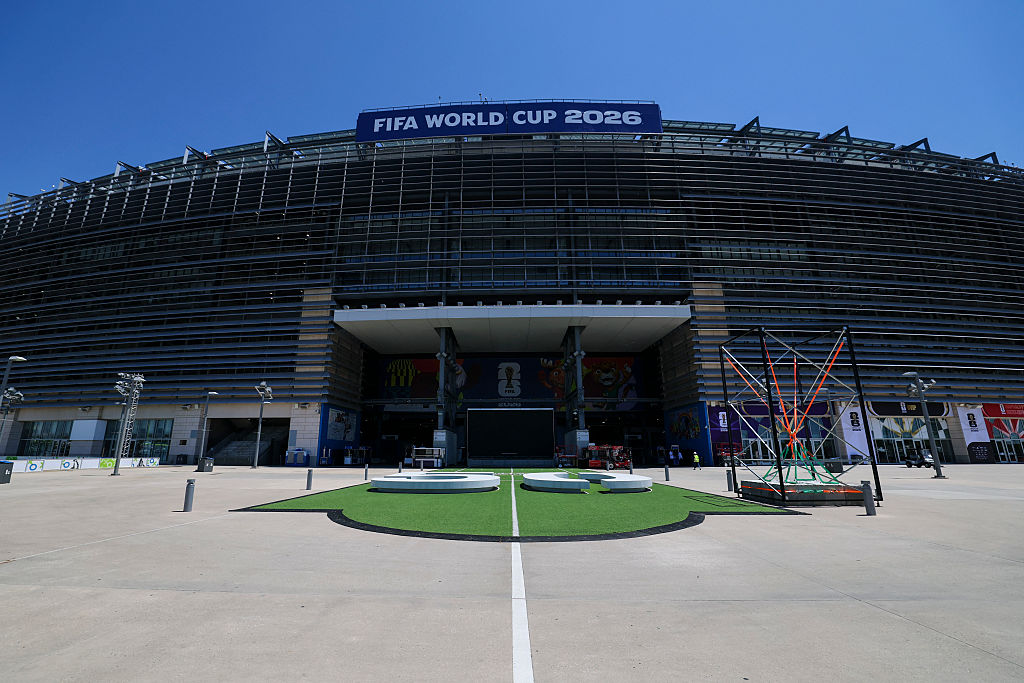
Nearly all of the 2026 World Cup host stadiums are now dealing with more extremely hot June and July days than the first North American World Cup in 1970.
That’s according to Climate Central, a nonprofit organization that conducts scientific research on climate change and energy issues. The group says that 14 of the 16 stadium sites chosen for the tournament are impacted by the changing climate, with the heat and humidity causing unique challenges for players, coaches and even spectators.
“The cities to really pay attention to, especially as we go through this tournament, are going to be Miami, Mexico City, Houston, as well as Guadalajara,” said Shel Winkley, a meteorologist at Climate Central. “They’re now experiencing about ten more extremely hot days on average, per year, than what they did back in those first games in the 1970s. And what’s most notable about those four cities is that we have a lot of matches being played there.”
Most of the stadiums are either open air or have retractable roofs, so players and their five million fans will be outside. Even in stadiums that are climate controlled, Winkley worries for fans who will be waiting in long lines and tailgating for hours outside.
“We also have a lot of visitors coming to the United States and coming to these cities from climates that aren’t as hot, aren’t humid as what they’re used to,” Winkley said.
Of the 104 matches, Climate Central expects 97% are likely to have “player performance impairing heat.”
“The one to watch the most, the one that has the climate change fingerprints on it the most, is the June 26th match. It’s Uruguay versus Spain in Guadalajara. The odds for performance impairing heat, so temperatures over 82 degrees, is 70%,” said Winkley.
In extreme heat, the body’s main cooling mechanism — sweating — may not cool it enough to prevent overheating, according to Climate Central.
When heat is combined with high humidity, sweat evaporates even more slowly, preventing quick cooling. Humid heat can overwhelm the body’s temperature control system and lead to heat-related illness, including heat cramps, heat exhaustion, and even fatal medical emergencies such as heat stroke.
“The most concerning sign of overheating and dehydration is confusion,” said Dr. Nicholas Cozzi, the EMS Medical Director at Rush University Medical Center. “They’re not acting right, they’re slow to respond, sluggish, repeating themselves, that’s concern for potential heat stroke.”
To help, FIFA has implemented mandatory three-minute hydration breaks midway through each half of games, regardless of the weather, but experts worry that isn’t sufficient to keep players safe.
“Which isn’t really enough time to bring down your core temperature as an athlete,” said Winkley. “We know that there is research to show that an athlete’s body temperature can raise as much as two degrees Fahrenheit during a match.”
The breaks are added to the end of the match, which means more time in the stands for fans and on the pitch for officials.
“The heat impacts people that are touching the World Cup differently,” said Winkley. “Fans are still sitting in the sun in the humidity, in the heat and again, not necessarily hydrating the same way the athletes are.”
Following backlash, FIFA recently reversed its water bottle policy and will now allow fans to bring in one, 20-ounce, refillable, disposable bottle.
To avoid an emergency, Cozzi suggests fans hydrate before and during prolonged periods outside and to cool someone who may be overheating as quickly as possible.
“Try to get some ice packs and put them on their head, their shoulders, their extremities, their arms, because ultimately you need to reduce that core body temperature,” said Cozzi.

