The history of the United States is deeply marked by questions of political polarization and how to best deal with it, and Illinois politics closely mirrors that division.
For many Illinois voters, the debate is less a political one than it is a deeply existential and spiritual one, and with such inflamed passions, it’s no small wonder multiple groups are actively exploring the idea of severing ties with Cook County and areas surrounding Chicago and forming their own, brand new state.
To examine the logistics of such a monumental move, NBC Chicago journalists Rose Schmidt, James Neveau and Shenxun Yao traveled to multiple locations across central and southern Illinois, including Golconda, Pinckneyville, Highland, and Springfield, and spoke to concerned residents who have joined the burgeoning movement, and to members of the communities in which they reside.
Advocates for the creation of a new state concede their task is herculean and rife with challenges, but they also argue the idea of a division is far from unprecedented, and that the challenge is worth the ultimate reward of having a state they feel is more suited to their political and cultural sensibilities.
The forces behind the movement include a variety of groups, and our story focuses on two of them. New Illinois, a registered 501(C)(4) nonprofit organization, has drafted a new proposed state constitution and has set up committees in more than half of the state’s counties, with an eye toward developing interest in their movement.
The other is Illinois Separation, which has spearheaded efforts to get advisory referendums placed on ballots throughout central and southern Illinois, with nearly three dozen counties already having voted in support of the idea of exploring a new state.
But just how realistic is their ultimate goal? What are the motivations of the residents behind the movement? What are the obstacles that stand in their way? And what do Illinois’ current leaders have to say about all of this?
“Separation: A State Without Chicago” sought to evaluate all of those questions and more.
The Winds of Political Change Blow Through the Land of Lincoln
Polarization in national politics is nothing new, but it’s become sharper and more loudly publicized than ever thanks to the ascent of President Donald Trump and the “Make America Great Again” movement that swept him into the Oval Office.
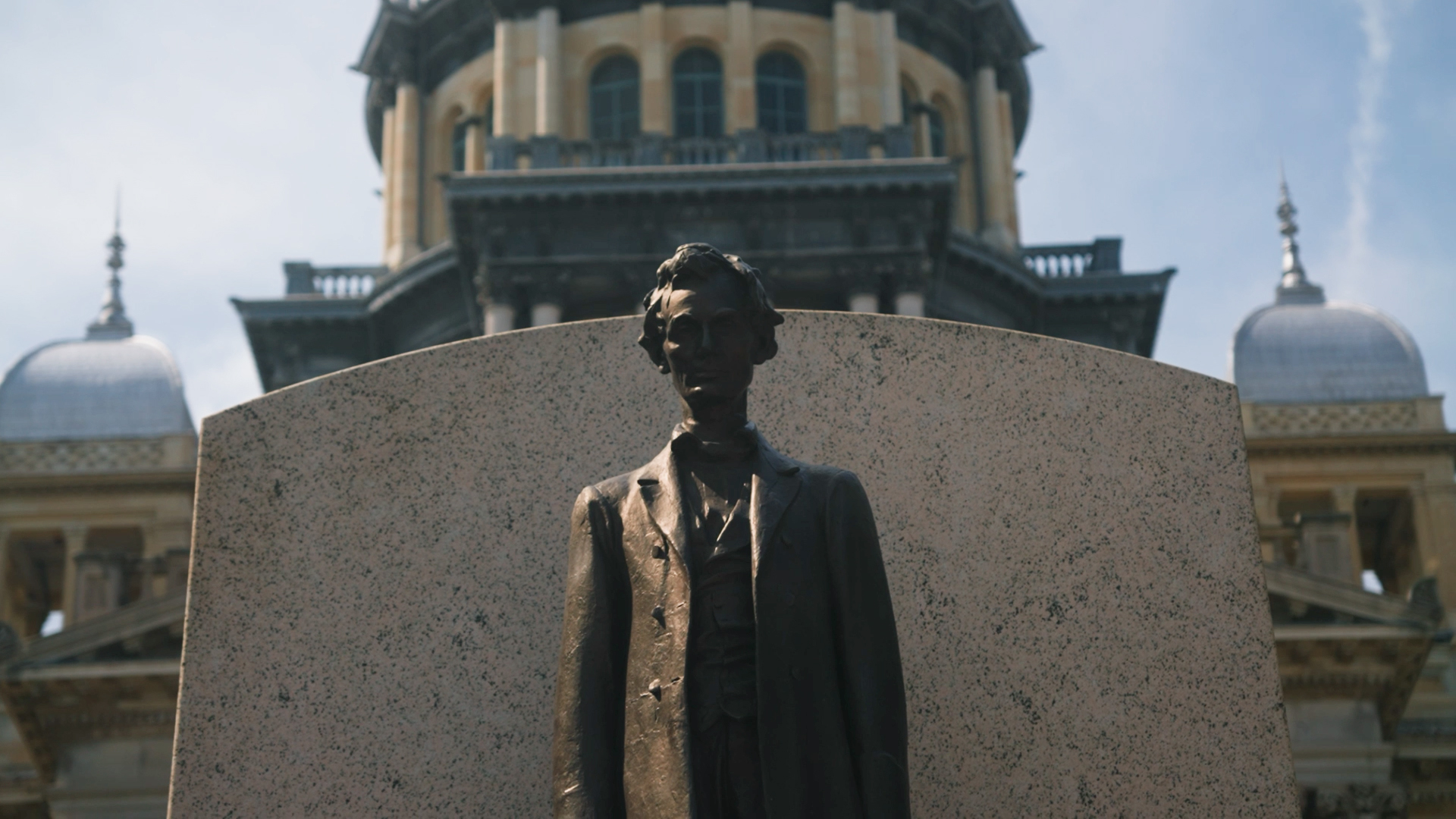
In Illinois, the election of Gov. J.B. Pritzker, the legislature’s gerrymandering of Congressional maps, and the creation of supermajorities in both the state House and Senate for Democrats have left conservative voters feeling their interests are being crowded out by the centralization of political power in Chicago and in other urban areas of the state.
G.H. Merritt, the chairman of New Illinois, was inspired by those feelings of neglect and anger, and became determined to explore and chart a new path forward.
“We have a whole lot of people in this country that don’t have a voice in state government anymore, and it’s growing in intensity,” she said. “It’s going to keep growing, and we look at it as kind of a pressure valve, that if you split the state, you don’t end up having a country fall apart.”
She joined the New Illinois movement after being inspired by other separation groups, most notably the work of New California, who have sought to push back against the state’s fiscal and political policies.
Like the California effort, Merritt says the group’s goal is to “educate Illinoisans about their right under the U.S. Constitution to pursue the formation of a new state, separate from the state of Illinois.”
Concurrently, Illinois Separation began efforts to place ballot questions in counties around the state asking whether residents wanted to seek the formation of a new state more in line with their values.
Most of the ballot measures had similar language to this:
“Shall (insert county here) collaborate in discussions with the remaining 101 counties of the State of Illinois, with the exception of Cook County, the possibility of forming a new state and ultimately seeking admission to the Federal Union as the 51st state, pursuant to the provisions of the United States Constitution?”
Ballot language of Illinois Separation Referendums
The effort has been successful in every county that has thus far voted on it, with 33 of Illinois’ 102 counties approving that ballot language in referendums during the primary and general election seasons between 2020 and 2024.
Even though the referendum movement and the New Illinois coalition are relatively new, the feelings of alienation and a lack of shared interest are far from unique in the history of Illinois.
A History of Unease in the Prairie State
Kenneth Owen, an associate professor at the University of Illinois-Springfield who specializes in the history of separation movements in American politics, said Illinois’ history cannot be fully told without recognizing the movements of politicians and residents who felt their interests would be best served by severing ties with the state.
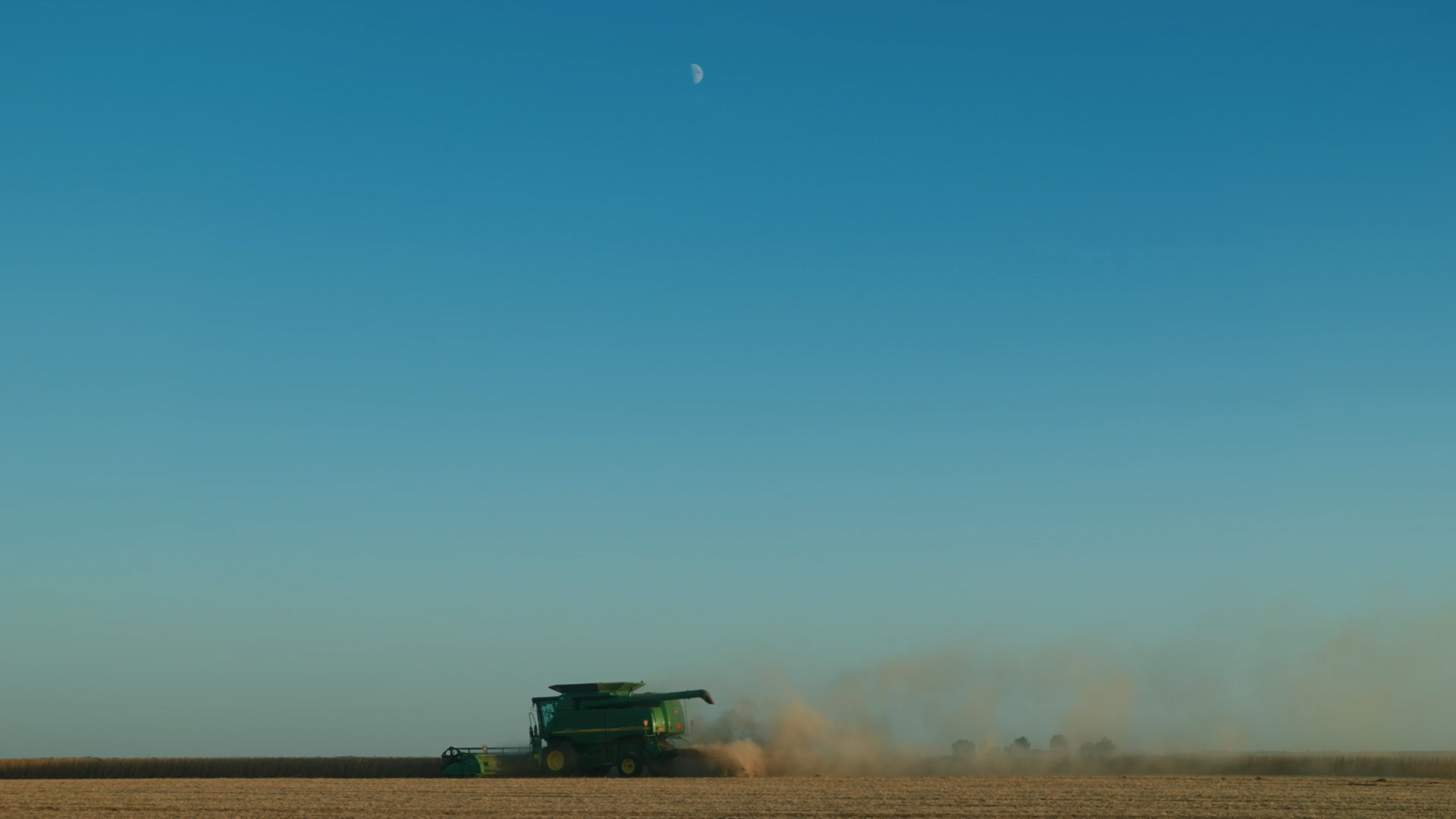
Illinois became a state in 1818, and in the lead-up to the Civil War, such division was talked about constantly, even before Chicago become the dominant political force that it is today.
“In the years around the Civil War, although Illinois was a free state, there were pockets of Illinois, especially in the south, that were very fearful about the idea of the abolition of slavery, and when the Civil War broke out, there were many people in border regions who wondered whether the government of Illinois represented them,” he said.
It was Chicago’s turn to question the divide between state and local interests in 1925, Owen says.
“As Chicago exploded in population in the late 19th century, downstate legislators who didn’t want to relinquish their power simply didn’t carry out reapportionment,” he said.
The Chicago City Council even floated the idea during that time of splitting off from the rest of the state, but in the decades following that proposal, several seismic events changed the landscape.
“When I was a kid, the legislature was gerrymandered in such a way that Chicago was underrepresented in the legislature, and therefore Chicago had to go hat in hand to the legislature to get the things that it wanted,” former State Rep. Robert Winchester said. “There was no home-rule authority, as there is now under the 1970 Constitution.”
At nearly the same time, the Supreme Court case of Reynolds v. Sims furthered changed the political calculus in Illinois, with the court ruling that single-seat electoral districts within states had to be roughly equal in population, rather than being apportioned in a way similar to that of the U.S. Senate, where each area gets precisely the same number of representatives.
While law professors polled by Time Magazine in 2015 called the decision “one of the best since 1960,” proponents of New Illinois and other separation movements criticize it, calling it the defining moment that led to Chicago gaining the upper hand in terms of its power and representation.
Shortly after the ruling, another separation movement in Illinois gained national attention.

Courtesy of Archives and Special Collections, Western Illinois University Libraries.
That movement, known as “The Republic of Forgottonia,” represented a group of 16 counties in west-central Illinois, aiming to draw attention to disinvestment through a series of well-publicized events.
“Forgottonia was, according to most people, a foolish idea, and yet at that time it was impossible to get to Quincy,” Jim Nowlan, a former member of the Illinois General Assembly and former Gov. Richard Ogilvie’s running mate in the 1972 gubernatorial election, said. “Today, you have two interstate-quality sets of highways going to Quincy. Maybe the ruckus Forgottonia leaders created drew a little attention to the fact you couldn’t get to Quincy, and that spurred interest in, or maybe just a little bit of guilt on the part of the other decisionmakers to put some good highways out to Quincy.”
According to the Macomb Area Conventions and Visitors Bureau, the movement bore other fruit, including restored Amtrak service and improved infrastructure that brought new bridge construction and road repair to the region.
The New Movement’s Historic Roots
New Illinois and Illinois Separation’s efforts both argue their efforts are based on Article IV, Section 3 of the U.S. Constitution, a mechanism that was used successfully to create the new state of West Virginia during the Civil War in 1863.
The pertinent portion of the document reads:
“New States may be admitted by the Congress into this Union; but no new State shall be formed or erected within the Jurisdiction of any other State; nor any State be formed by the Junction of two or more States, or Parts of States, without the Consent of the Legislatures of the States concerned as well as of the Congress.”
According to Owen, the barriers to actually creating a new state are extremely high because of the Constitutional language.
“It’s difficult because you have to get a lot of different parties to agree,” he said. “You have to get the home state to agree. You have to get the federal government to agree, and it sits very unevenly with a series of other legal rulings.”
That means in addition to getting state approval, the move would also have to receive the blessing of Congress, which would have to pass legislation that would then be signed by the president.
Still, state separation proponents are undeterred. They point to the formation of the state of Maine, which repeatedly agitated to be separated from Massachusetts in the early 19th century. The movement was finally successful as part of the Missouri Compromise in 1820.
“When Maine wanted to separate from Massachusetts, it took them 38 years to make that happen,” Loret Newlin, the head of Illinois Separation, said. “Thirty-eight long years, and some of their reasons for wanting to separate were kind of like ours. They did six referendums. They had some issues they needed to address, and every time the vote got higher and higher until they finally passed a referendum with such support that the Massachusetts legislature was embarrassed not to grant them their statehood.”
They also point to the formation of West Virginia, which was carved out of Virginia during the heat of the Civil War in 1863.
The People Behind the Separation Movement
While groups like New Illinois and Illinois Separation have made efforts toward seeking a separated state, residents in the impacted counties are also feeling the call to act.
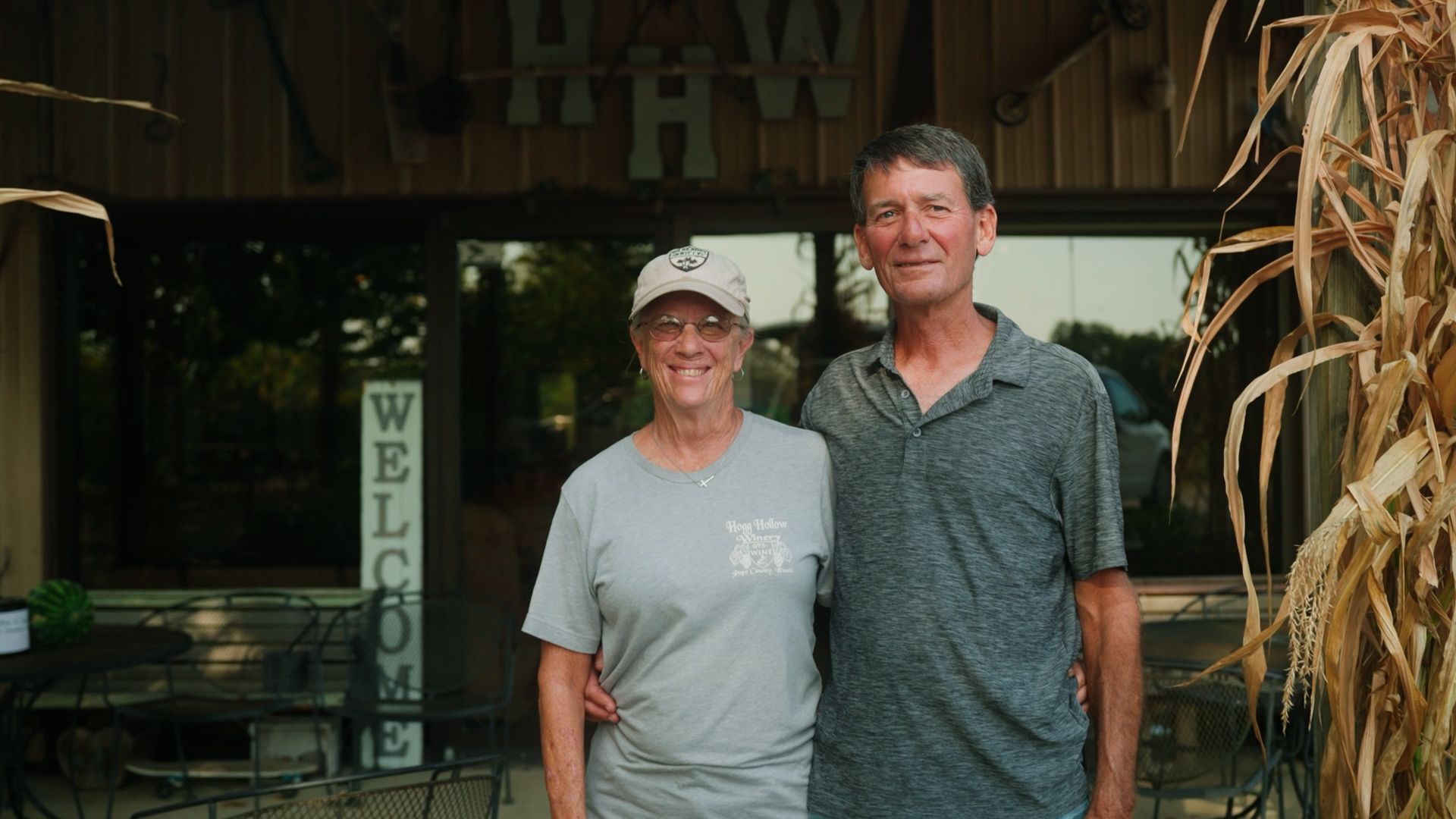
Steve Hogg, the owner and operator of Hogg Hollow Winery in Golconda, joined New Illinois as a way of pushing back against what he calls prohibitive taxes that his business has to pay to stay afloat.
“It’s mainly taxes, being taxed without representation,” he said. “Owning a winery, making alcohol, we get taxed ridiculously in all different directions. And it seems like the state of Illinois, every week or two, you hear about a next tax that’s going in.’
He says that the differences are also philosophical and practical, that gun laws and other measures that work in Chicago wouldn’t work in downstate.
“We’ve got to take care of ourselves, so we need our guns,” he said. “We’ll call the sheriff, and he’ll be out in a half hour to write a report.
Virgil Straeter, an auctioneer and business owner in the community of Highland, echoed Hogg’s sentiments about taxes.
“Real estate and other taxes are drowning people that are hardworking, and working 12 hours a day, a lot of them in separate jobs, a lot of them trying to make a living and trying to keep ahead of it, and there’s a breaking point to where if you can’t do it, you’ve got to do something else,” he said.
Rita Schwebel, a Pinckneyville resident, said she was inspired to join the movement by the passions of others.
“I never would have dreamed in school that I would be involved in government, politics, anything,” she said. “Even when I went to GH’s first meeting, I was skeptical.”
She says the long odds of success haven’t dissuaded her.
“What would you do? What other choice do we have? You’ve got to try something, and this is a legitimate way to do it,” she said.
The Economic Challenges and Realities
In addition to questions over the likelihood of the state and Congress approving such a move, debates have evolved on whether a division of the state is financially feasible.
At least in New Illinois circles, the debate centers around a report from Southern Illinois University’s Paul Simon Institute, which argues that residents in downstate Illinois receive more tax dollars from the government than they put into the economy, while suburban residents receive significantly less.
In the last year for which data is cited in 2021, Cook County received approximately $0.78 back for every dollar it sent to the state. Suburban counties fare even worse, receiving just $0.58 per dollar. Meanwhile, central Illinois counties received $2.04 for every dollar they send, and southern Illinois counties received $3.57 per dollar.
Experts who support the work of New Illinois and other movements have questioned the data and conclusions of the Paul Simon Institute’s work, including Bill Bergman, who has worked for decades in both the public and private sectors and who worked at the Federal Reserve of Chicago for 13 years.
“I think they did come to a conclusion. I’m afraid it wasn’t a good conclusion given the quality of the data they work with and how old it was,,” he said.
New Illinois has issued a rebuttal to the report, arguing that the report excluded “large portions of the state’s revenues and disbursements” and that it did not “always accurately show where revenue as collected or where disbursement took place.”
The groups also question the financial health of Illinois, with Bergman arguing the state’s balanced budget reports aren’t reflective of actual spending and revenue.
“Illinois is abysmal in how it’s been financially reporting its results to its citizens,” he said. “Budgets are planning documents, but they’re not the results. The state of Illinois is among the worst states financially in terms of its financial position. Liquidity is one thing, solvency is another. Liabilities exceed assets by dramatic amounts in more than almost any state in the nation.”
He also contests the idea that a New Illinois would suffer without tax dollars and revenues from Chicago.
“Indiana, Iowa, Wisconsin are thriving states. They don’t have Chicago,” he said. “New Illinois can thrive without Chicago.”
Former U.S. Rep. Cheri Bustos is sympathetic to the feelings of downstate residents, but agrees with the argument that revenues from Chicago would be sorely missed by a new state.
“The reality is that if we didn’t have Chicago economically, our state would be a lot worse off,” she said. “The tax dollars that are generated out of Chicago and out of Cook County help the rest of the state.”
What Do Current Illinois Leaders Say About the Movement?
Pritzker has been a critic of separation movements, arguing his administration has made it a priority to work with southern Illinois residents and lawmakers to address their needs and concerns.
“I do govern for them,” Pritzker said in an interview with NBC Chicago’s Rose Schmidt. “I have treated the voters who didn’t vote for me the same way I have treated the voters who voted for me.”
In a response to NBC Chicago ahead of the release of the documentary, a Pritzker spokesperson called the separation effort a “stunt” and that “it’s not going to happen.”
Illinois Attorney General Kwame Raoul also contested the legality of separating the state.
“The admissions clause grants Congress the power to admit new states and prevents a subdivision of an existing state from breaking away without the state’s consent,” he said in a 2023 editorial.
Owen pushed back slightly on the idea that the separation movements were “stunts.”
“Most of them exist somewhere between being a political publicity stunt and being a tool for the mobilization of a more general sense of grievance,” he said. “Their main goals tend to be arguing for more representation or particular acknowledgement of distinct features of their region.”

What Lies Ahead for the Movement
In 2026, the different groups pushing forward with the movement say there is still progress being made toward achieving their vision of a separate state.
According to Illinois Separation, at least five counties intend to hold votes on separation referendums during the 2026 general election. That includes Henderson County, located in far western Illinois. Coincidentally, it would be the fifth county in the area known as “Forgottonia” to cast ballots on the idea of separating from Illinois.
Coles County, located just south of Champaign and surrounding by five counties that have already passed referendums, will also vote, as will Hamilton, Saline and Gallatin counties, all of which are located in the far southern portion of the state.
The votes gibe with the vision of Merritt, who says New Illinois’ goal is to create a completely new state with only Cook County excluded, a move she thinks even suburban residents would be receptive to.
“I don’t think 100% of each collar county would want to be part of New Illinois, but a lot of the collar counties are still rural, and they don’t like what’s going on in Illinois, and so part of their misunderstanding is that it isn’t just going to be impoverished areas of southern Illinois that want to be a new state,” she said. “Our goal would be to have 101 counties in New Illinois.”
As he expresses skepticism and concern over Illinois’ finances, Bergman insists that if the new state were to be created, they would be capable of taking on debt from the existing state of Illinois and would be able to generate sufficient revenue to overcome that hurdle in its early days.
“A rough back of the envelope calculation suggests that if the new Illinois gets 40% of the debt, ultimately, it’s still a feasible outcome,” he said. “Going forward, it also depends on the economic growth of New Illinois, and it’s our belief and New Illinois’ belief that the new state will be not only financially feasible, but it will be a greater attraction for investment and growth in the state.”
Bustos believes separation efforts are doomed to failure, and the key is going to be for lawmakers to listen closely to the concerns of those residents downstate, and to be better stewards for their interests.
“Here’s the question I would throw out to the Illinois statewide leaders: how often are they going to southern Illinois? And when they’re going to southern Illinois, are they going down there just to go to the Du Quoin State Fair? Are they going down just to speak at Southern Illinois University? Or are they going down there to actually walk the neighborhoods,” she said.

For people like Straeter, he looks at it as one more challenge to overcome in a life filled with challenges.
“I’ve never been a person that would shy away from a challenge, and mostly whenever I find something that people say can’t get done, I find a way to get it done,” he said.”
Ultimately, experts like Owen believe that while the notion of a new state is unlikely to come to fruition, he doesn’t believe the outcome will be as simple and clear-cut as more financing for infrastructure, which occurred during the “Forgottonia” era.
“There may be solutions that involve more devolution of governmental powers to county boards, more discretionary spending that’s given to county boards, but that doesn’t get to the root sense of grievance,” he said. “It doesn’t get at the root sense of disaffection and disassociated with Springfield and Chicago more generally. I don’t think that being quite as neat a solution as building more bridges, updating a few roads, underwriting a rail service.”